
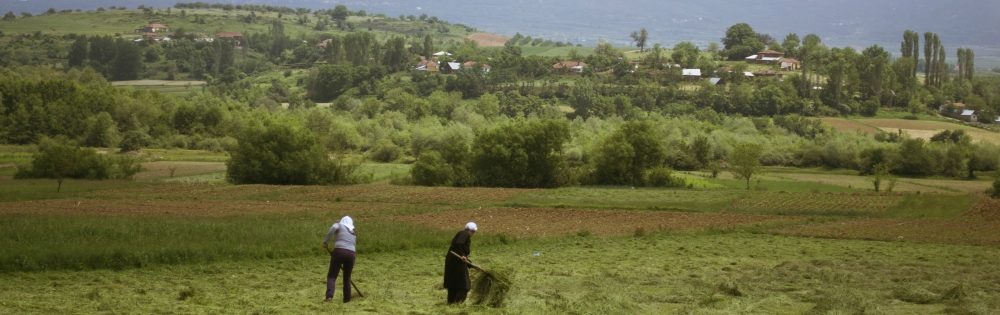
To estimate the potential physical impacts of climate change on the agricultural sector of Albania and Uzbekistan a quantitative analysis at the agro-ecological zone level was carried out. Combined with an assessment of the country’s existing adaptive capacity, this provided a baseline estimate of vulnerability to climate change in the agricultural sector and led to a menu of adaptation options.
The objective of the analytical and advisory program “Reducing Vulnerability to Climate Change in Agricultural Systems” is to enhance the ability of four countries in Europe and Central Asia (ECA) to mainstream climate change adaptation into agricultural policies, programs, and investments. These countries are Albania, Moldova, Macedonia, and Uzbekistan. This objective will be achieved by raising awareness of the threat, analyzing potential impacts and adaptation responses, and building capacity among national and local stakeholders with respect to assessing the impacts of climate change and developing adaptation measures in the agricultural sector, narrowly defined to encompass crop (including cereals, vegetables, fruits, and forage) and livestock production.
FutureWater will carry out a quantitative analysis at the agro-ecological zone level of Albania and Uzbekistan to estimate the potential physical impacts of climate change on the agricultural sector. Combined with an assessment of the country’s existing adaptive capacity, this provides a baseline estimate of vulnerability to climate change in the agricultural sector and will lead to a menu of adaptation options.
Links
- Background information on project from World Bank
- Adapting to Climate Change in Europe and Central Asia – World Bank Report June 2009
Gerelateerde publicaties
2011 - FutureWater Report 106
 Hunink, J.E., P. Droogers. 2011. Climate Change Impact Assessment on Crop Production in Uzbekistan. World Bank Study on Reducing Vulnerability to Climate Change in Europe and Central Asia (ECA) Agricultural Systems. FutureWater Report 106X
Climate Change Impact Assessment on Crop Production in Uzbekistan. World Bank Study on Reducing Vulnerability to Climate Change in Europe and Central Asia (ECA) Agricultural Systems
Hunink, J.E., P. Droogers
2010 - FutureWater Report 105
Hunink, J., P. Droogers. 2010. Climate Change Impact Assessment on Crop Production in Albania. World Bank Study on Reducing Vulnerability to Climate Change in Europe and Central Asia (ECA) Agricultural Systems. FutureWater Report 105XClimate Change Impact Assessment on Crop Production in Albania. World Bank Study on Reducing Vulnerability to Climate Change in Europe and Central Asia (ECA) Agricultural Systems
Hunink, J., P. Droogers
